Psychodynamictherapy(talk therapy)onlinewithTalkspace
Psychodynamic therapy can help you lead a healthier life by uncovering life experiences and emotional patterns that challenge your ability to thrive.




Here's how it works

Check insurance coverage
See what you can save through your insurance plan.

Personalized match
Answer a few questions online and we'll match you with a licensed provider.

Start therapy
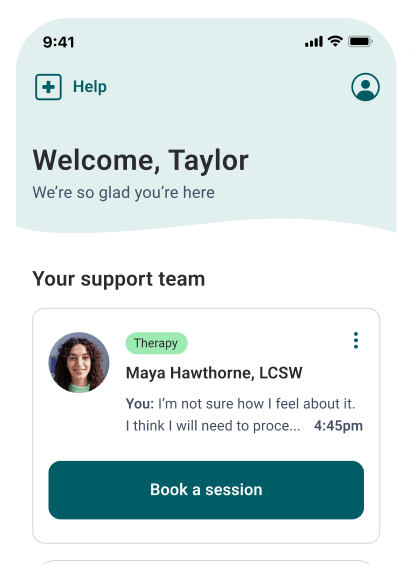
Communicate with your therapist through live sessions, messaging, or both.
Benefits of Talkspace

Eliminate commute time and scheduling hassles

No search for a therapist or long wait for an appointment

Seamlessly switch providers, at no extra cost

Receive affordable, high-quality mental health care
What talk therapy offers

More than 60,000
5-star reviews
Read why people love using Talkspace.
See all reviews

Ozzie

Dori

Samantha

Hari

Fatima

Diana

Melissa

Evert

April

Corisha
Any questions?
Find trust-worthy answers on all things mental health at Talkspace.
What is psychodynamic therapy?
Psychodynamic therapy is a proven form of talk therapy designed to help a person experience relief from certain mental or emotional stress. Based in psychoanalytic theory, this approach is rooted in the idea that present-day problems are connected to unconscious conflicts from past experiences, and aims to identify the unknown roots of present pain in order to overcome it.
How does psychodynamic therapy work, and is it effective?
With this form of talk therapy, a psychodynamic therapist will work with you to understand your thoughts and feelings, with an emphasis on the unconscious dynamics that drive them and the behavior that results. If you’re experiencing anxiety, depression, or other mental health concerns, psychodynamic therapy may be an effective option for treatment, especially to help you:
- Identify patterns in your relationships and your behavior.
- Explore and understand emotions.
- Improve relationships by reflecting on past experiences.
What is psychodynamic therapy used for?
Psychodynamic psychotherapy can be used in individual treatment or in group therapy settings for couples or families. The most common mental health conditions that psychodynamic therapy can help to manage include:
- Addiction and substance abuse
- Anxiety
- Depression
- Obsessive Compulsive Disorder
- Prolonged sadness
- Panic disorder
- Post-traumatic Stress Disorder
- Personality disorders (such as borderline personality disorder)
- Physical symptoms that lack a physical basis and stress-related physical ailments
- Persistent feelings of isolation and loneliness
Does Talkspace offer psychodynamic therapy?
Some Talkspace therapists offer psychodynamic therapy in their practice. Online therapy plans include the ability to message with your therapist daily, and some include live psychoanalytic psychotherapy sessions (video, audio, text).
Does insurance cover psychodynamic therapy?
If you’re looking for online therapy that accepts insurance, get connected at Talkspace to check your eligibility. If your insurance plan covers therapy, it may also cover online psychodynamic therapy. More and more insurance plans are covering therapy or counseling, so check with your insurance company to confirm your coverage details for psychodynamic therapy. If you don’t have a health insurance plan that covers mental health services, you can also pay with an FSA/HSA card. Many employers also offer employee assistance programs (EAP) designed to help employees access therapy, so you may be able to receive Talkspace therapy through that route.
Can I do psychodynamic therapy online?
Psychodynamic therapy can be done online, and many members prefer it that way. Talkspace members message their therapist whenever, wherever, and get responses daily, 5 days a week. Live video, audio, and messaging therapy sessions are also available.
What does psychodynamic counseling focus on?
Psychodynamic therapists focus on exploring an individual’s past experiences and relationships to get a better picture of current challenges and any emotional patterns that have developed over time. Self-reflection and self-examination are the hallmarks of psychodynamic theory, with the therapist-patient relationship playing a vital role in treatment. The therapist aims to help a person recognize recurring emotional patterns such as defense mechanisms, and then use that insight to help change patterns that are no longer serving them. This form of therapy has shown to be effective in treating a wide range of symptoms associated with mental health conditions including depression, anxiety disorders, and panic disorder.
What’s the difference between psychodynamic therapy, psychoanalytic therapy, and cognitive behavioral therapy?
Psychodynamic and psychoanalytic therapy both focus on exploring unconscious thoughts and past experiences to gain insight into current challenges. Psychoanalytic therapy, however, is generally more intensive and long-term, while psychodynamic therapy sessions can be shorter in total duration and less frequent. Cognitive behavioral therapy focuses on what is happening in your present life (rather than exploring deep into the past) to help adjust negative behaviors and improve emotional well-being.


Download the app

If you are in a life threatening situation - don’t use this site. Call 988 or use these resources to get immediate help.